

close
Choose Your Site
Global
Social Media


Views: 0 Author: Site Editor Publish Time: 2026-10-28 Origin: Site


Every time you enter or exit a vehicle, you interact with the interior door handles. These components act as high-touch points that directly influence passenger safety and perceived cabin quality. We rely on them to function flawlessly under stress, yet they remain a common failure point in aging vehicles. To be clear, we are focusing entirely on the door actuation components that release the latch mechanism, rather than overhead passenger grab handles used for stability.
Factory handles frequently succumb to plastic fatigue, UV degradation, and linkage snapping. Sourcing replacements that meet exact structural and visual standards presents a significant challenge. A poorly manufactured handle compromises cabin aesthetics and risks leaving occupants trapped during an emergency. You must evaluate replacement auto interior door handles through a strict lens of material science, dimensional accuracy, and mechanical compatibility. This ensures long-term reliability and restores the original factory feel.
Material Integrity: The choice between standard plastics, reinforced composites, and metals dictates both the lifespan and tactile feedback of the handle.
Dimensional Accuracy: Exact interior door handle fitment is non-negotiable; millimeter deviations can cause linkage binding, electronic sensor failure, or door panel rattling.
Aesthetic Integration: Matching interior door panel handle colors requires cross-referencing OEM trim codes and accounting for the UV fading of existing cabin materials.
Installation & Maintenance: Successful replacement relies on preserving door panel integrity, correctly routing actuation cables, validating latch tension, and applying proper lubrication for effortless operation.
Automotive engineers design handles with precise ergonomic parameters. Standard dimensional requirements dictate the clearance depth, grip width, and pull angle. Passenger and driver ergonomics demand enough clearance behind the lever to accommodate gloved hands without scraping the door panel. We typically look for a minimum clearance depth of 30 to 40 millimeters. The grip width must distribute pulling force evenly across the fingers to prevent pinch points. The pull angle generally follows the natural arc of a human wrist. This differs heavily from exterior pull handles, which often require a straight outward pull against heavier latch springs.
Handle shape and surface texture directly impact actuation leverage. Manufacturers utilize specific texturing to ensure effortless operation in all conditions. Micro-graining on plastics provides a subtle, non-slip surface that resists finger oils. Knurling or brushed finishes on metal handles offer tactile feedback and superior grip, even with wet hands. A well-designed texture prevents slippage during the moment of latch release. You want a confident and secure actuation every single time you pull the lever.
Mechanical thresholds for latch release are strictly calibrated. Engineers measure this actuation force in Newtons. The handle must provide enough resistance to prevent accidental opening while remaining light enough for a child or elderly passenger to operate smoothly. If the return spring is too stiff, the handle feels heavy and cumbersome. If the tension is too loose, the lever rattles over bumps or fails to fully reset the latch mechanism.
Structural rigidity becomes a matter of life and death during emergency egress scenarios. In the event of a collision, occupants must exit the vehicle immediately. A handle that snaps under panic-induced pulling force traps passengers inside. Replacement units must meet or exceed OEM sheer strength requirements. The pivot points and linkage attachments bear the brunt of this force. They require robust reinforcement to guarantee safety when you need it most. We inspect the plastic webbing around the pivot pin hole; thin webbing indicates a cheap part that will fail under stress.
Modern vehicles increasingly abandon traditional mechanical linkages for smart technology. Electronic push-button releases, known as e-latches, and capacitive touch sensors now dominate luxury interiors. These systems use micro-switches to send an electronic signal to the door lock actuator via the vehicle's CAN bus network. Replacing these high-tech handles requires completely different evaluation criteria compared to older mechanical levers.
You must verify wiring harness compatibility before attempting an installation. Pin connectors must match the factory plug exactly to avoid throwing error codes on the body control module. Micro-switch tolerances must be precise to register a press without requiring excessive force. Many modern handles integrate OEM ambient LED lighting channels. The replacement housing must feature the correct optical pathways and transparent plastics to diffuse the LED light evenly. This ensures the new handle matches the rest of the cabin's illumination perfectly.
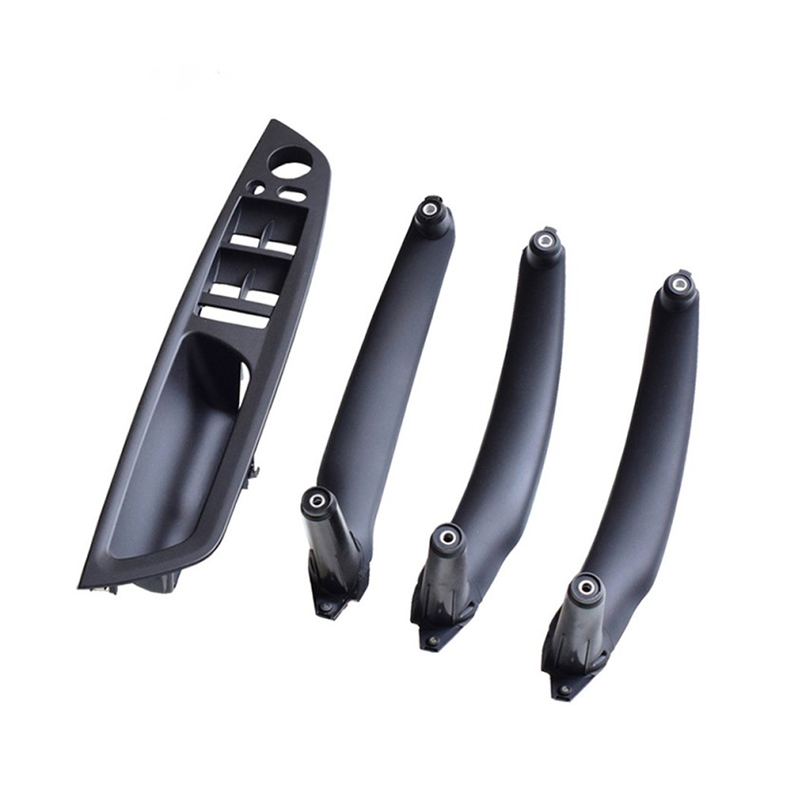
Automotive manufacturers rely heavily on advanced polymer blends for interior components. Acrylonitrile Butadiene Styrene blended with Polycarbonate creates a highly versatile material. An ABS PC interior door pull handle offers exceptional technical properties. The Polycarbonate adds significant impact resistance and structural rigidity. The ABS provides a smooth surface finish and manufacturing flexibility during the injection molding process.
This specific blend delivers distinct advantages for cabin environments. It maintains thermal stability across extreme temperature fluctuations. Whether your car sits in freezing winter weather or bakes in the summer sun, the handle retains its shape without warping. It also resists degradation from chemical cleaners and natural hand oils. You must address the trade-offs, though. Without proper UV-resistant coatings, ABS+PC suffers from long-term ultraviolet degradation. This leads to a chalky appearance or eventual brittleness. We often see untreated plastics snap at the pivot joint after five years of sun exposure.
Many owners seek aftermarket metal handles to solve chronic plastic failure issues. Billet aluminum and die-cast zinc alloys offer permanent solutions for vehicles notorious for snapping factory levers. These metal upgrades provide unmatched sheer strength and a premium, heavy-duty feel that plastics simply cannot replicate. They transform the tactile experience of opening the door.
You must carefully evaluate the trade-offs before upgrading to metal. Metal handles add increased weight to the assembly. This extra mass can overpower a weak factory return spring, causing the handle to sag and rattle against the bezel. Metal is also highly temperature sensitive. It feels freezing to the touch in winter and uncomfortably hot in summer. If the manufacturing tolerances are loose, metal-on-metal or metal-on-plastic contact creates irritating rattles while driving. We recommend applying felt tape to the backside of metal levers to dampen vibration noise.
Luxury vehicles often feature wrapped handles to elevate cabin aesthetics. The construction of leather interior door handles relies on a rigid underlying substrate. Manufacturers mold this core from ABS or glass-reinforced nylon. They apply industrial contact adhesives to bond the leather tightly around the complex curves of the substrate. This creates a soft-touch surface that feels exceptional in the hand.
Evaluating premium finishes requires attention to detail. Stitch durability is paramount. Frayed French seams quickly ruin the luxury aesthetic. The leather must resist hand oils, friction, and daily wear without peeling at the edges. These handles demand specific conditioning requirements. You must apply dedicated leather protectants regularly. This prevents the material from drying out, shrinking, or cracking under intense cabin heat. When leather shrinks, it pulls away from the substrate, creating unsightly bubbles and loose edges.
Comparison of Interior Door Handle Materials | |||
Material Type | Durability & Strength | Tactile Feel & Ergonomics | Maintenance Requirements |
|---|---|---|---|
ABS + PC Blend | High impact resistance, flexible, resists snapping under normal use. | Smooth, lightweight, temperature-neutral in extreme weather. | Low maintenance. Requires occasional UV protectant spray. |
Metal Alloys (Aluminum/Zinc) | Maximum sheer strength. Virtually impossible to break manually. | Heavy, premium feel. Highly sensitive to hot and cold temperatures. | Requires precise installation to avoid rattles. No surface conditioning needed. |
Leather-Wrapped Substrate | Moderate. Substrate is strong, but surface material can wear or tear. | Luxurious, soft-touch grip. Excellent ergonomic comfort. | High maintenance. Requires regular leather conditioning to prevent cracking. |
Comparing aftermarket replacements against OEM specifications requires a strict framework. Factory parts undergo rigorous quality control to ensure perfect alignment with door panel bezels and linkage mechanisms. Aftermarket parts vary wildly in quality. You must measure the mounting boss locations, the pivot pin diameter, and the overall housing dimensions using digital calipers. Millimeter deviations lead to binding levers or unsightly panel gaps.
Treat "universal fit" claims with extreme skepticism. Door handles are highly specific to individual vehicle platforms. You must prioritize exact interior door handle fitment by cross-referencing part numbers. This includes accounting for chassis updates and trim level variations. A base model might use a manual lock toggle, while a premium trim integrates an electronic lock switch into the same handle housing. Ordering the wrong variant guarantees an installation failure. Always check the exact build date of your vehicle, as manufacturers sometimes change handle designs mid-production year.
Driver-side and passenger-side handles are rarely interchangeable. They feature structural differences based on mirror-image mounting points and specific lock switch cutouts. The angle of the pull lever and the routing of the linkage cable dictate a side-specific design. Attempting to force a left handle into a right door panel breaks the mounting tabs and misaligns the actuation cable.
Use specific identification strategies to ensure correct orientation. Locate the physical stamps on the back of the housing. Manufacturers typically mold an 'L' or 'R' directly into the plastic casting. You can also decode OEM part number conventions. Many automakers use odd suffix digits to denote left-side parts and even digits for right-side parts. You must understand how linkage geometry dictates the internal design. A cable pull system requires a slotted retaining hook. A rod push system utilizes a plastic snap-clip bushing to secure the metal rod.
The structural integrity of the handle relies entirely on its mounting mechanisms. Standard designs utilize a combination of retaining screws, plastic snap-clips, and bezel integration to secure the housing to the inner door skin. The handle must sit flush against the panel to prevent squeaks and rattles caused by engine vibration or road noise.
You must evaluate the structural reinforcement around the screw bosses. This is a common failure point on cheap aftermarket units. When you tighten the retaining screws, thin plastic bosses crack under torque, leaving the handle loose. High-quality replacements feature thickened plastic or inserted metal knurls at the mounting points. This allows them to withstand the necessary installation torque. We always recommend threading the screws in by hand first to avoid cross-threading the plastic bosses.
Guessing your interior color based on online photos rarely yields a perfect match. You must locate and interpret your vehicle's specific trim codes. Automakers typically print these codes on the Service Parts Identification (SPID) label. You will find this label inside the driver's door jamb, hidden in the glove box, or under the spare tire cover. These alphanumeric codes hold the key to exact color matching.
Understand the difference between generic color names and specific manufacturer codes. A generic term like "Tan" might encompass five different shades across a single manufacturer's lineup. You need the exact code for "Shale," "Neutral," or "Cashmere" to source accurate interior door panel handle colors. Providing this code to your parts vendor ensures the replacement plastic seamlessly blends with your existing door card.
Even with the correct trim code, color matching presents real-world challenges. A brand-new handle often contrasts sharply with a 10-year-old, sun-faded door panel. UV degradation alters the chemical composition of interior plastics. It lightens dark colors and yellows light colors. The new part looks out of place against the weathered surroundings.
You can employ several strategies to mitigate this visual mismatch. Replacing handles in pairs across the front or rear doors creates visual symmetry. This makes slight color variations less noticeable to passengers. Alternatively, you can utilize specific interior vinyl dyes to blend the new handle with the old panel. Thoroughly clean the new handle with a prep solvent, apply an adhesion promoter, and spray light coats of color-matched dye. Some owners bypass color matching entirely by choosing contrasting accent colors. Upgrading to chrome, brushed aluminum, or carbon fiber finishes intentionally stands out and updates the cabin aesthetic.
The primary risk of handle installation lies in removing the door panel. Automakers secure these panels with brittle plastic retainers, hidden screws, and sticky butyl moisture barriers. Pulling the panel forcefully by hand snaps the clips, tears the mounting holes, and damages the vapor barrier. This leads to severe water leaks and persistent interior rattling once reassembled.
Mitigate this risk by using the correct techniques and tools. Procure a set of specialized non-marring plastic pry tools to safely disengage the clips from the metal door frame. Search for hidden screws behind armrest trim pieces, window switch bezels, and courtesy light housings. Work slowly around the perimeter, applying even pressure. Always purchase a bag of replacement OEM-style door clips prior to starting the job. Breaking a few clips is inevitable on older vehicles. Having spares on hand prevents reassembly delays.
Connecting the linkage mechanism requires precision. You must properly seat the Bowden cable or linkage rod into the new handle assembly. If the lead barrel on the cable end is not fully locked into its retaining slot, it pops out during the first hard pull. Ensure the cable housing clips securely into its anchor bracket to maintain proper tension on the inner wire.
Connect the linkage cable barrel to the new handle pivot arm slot.
Seat the cable housing firmly into the plastic anchor bracket on the handle body.
Reconnect the electronic lock switch wiring harness and verify the connector clicks into place.
Close the door latch mechanism manually with a screwdriver shaft while the door remains open.
Pull the new interior handle to verify the latch releases smoothly and completely.
Test the latch mechanism multiple times before re-securing the door panel. Test both the interior handle and the exterior handle. Verify that the power lock actuators function correctly. Failing to test the system before closing the door results in a permanently locked door. You will have to destroy the interior panel to get the door open again.
Proper maintenance extends the life of your new handle and ensures smooth operation for years. The pivot points and return springs require lubrication to prevent wear and reduce actuation friction. Apply a small amount of dry Teflon (PTFE) spray to the moving metal components within the handle housing. Avoid heavy petroleum greases or WD-40, as these attract dust and grit, which eventually grind down the plastic pivot joints.
Specify your cleaning protocols based on the handle material. Avoid harsh chemical solvents, ammonia-based glass cleaners, or abrasive scrubbing pads on ABS+PC plastics. These strip the protective coating and accelerate UV damage. Use mild soapy water and a microfiber cloth for routine cleaning. For leather variants, apply dedicated automotive leather conditioners quarterly. This keeps the material supple and prevents friction wear from daily use.
Locate your vehicle's interior trim code on the door jamb sticker or glove box label to ensure accurate color matching before ordering parts.
Remove your door panel using non-marring plastic pry tools to inspect whether your vehicle uses a cable-pull or rod-push linkage system.
Source replacement handles from vendors that provide exact dimensional schematics, OEM part number cross-references, and warranty backing.
Test the door latch actuation and lock mechanisms thoroughly while the door is open before snapping the interior panel back into place.
A: Handles are side-specific due to mounting angles and lock integration. The left handle fits the driver-side in LHD vehicles, while the right fits the passenger-side. Look for an 'L' or 'R' stamped on the back of the OEM housing. Additionally, OEM part numbers ending in an odd digit typically denote the left side, while even digits denote the right side.
A: An ABS+PC blend offers the best balance of OEM tactile feel and long-term durability, resisting temperature extremes and impacts. However, aftermarket metal alloys like billet aluminum or zinc provide the highest sheer strength and maximum resistance to snapping, though they add weight and feel sensitive to hot or cold weather.
A: A loose handle usually stems from stretched linkage cables, a missing or weak return spring, or a lack of pivot point lubrication. It can also be caused by poor aftermarket manufacturing tolerances where the pivot pin is too small for the housing, or cracked mounting bosses that fail to hold the assembly tight against the door panel.
A: Yes, you can upgrade to leather handles if the underlying substrate geometry matches your door panel bezel perfectly. This usually requires sourcing OEM parts from a higher luxury trim level of your exact vehicle model. Ensure you maintain the leather regularly with conditioners to prevent cracking and shrinking.
A: Do not guess based on photos. Find the specific interior trim code printed on your vehicle's Service Parts Identification sticker. This sticker is typically located inside the driver's door jamb, inside the glove box, or under the spare tire cover. Use this exact alphanumeric code when ordering replacements.
A: Yes, you need specific tools to avoid damage. Standard requirements include a set of non-marring plastic trim removal tools to safely pop door clips, a specific Torx or Phillips screwdriver set for the retaining hardware, and a small hook tool to easily manipulate and seat the linkage cable.


