

close
Choose Your Site
Global
Social Media


Views: 0 Author: Site Editor Publish Time: 2026-07-09 Origin: Site


Car cabins routinely experience brutal thermal cycling. On a hot summer afternoon, dashboard temperatures often exceed a blistering 140°F (60°C). This relentless heat systematically degrades standard interior components. Over several seasons, this extreme thermal stress causes built-in overhead visors to sag uncontrollably. It also forces cheap windshield sun shades to crack or flake apart across your dashboard. To survive these severe conditions, a durable car sun visor must balance robust UV resistance, structural integrity under high heat, and consistent mechanical resilience for daily use.
Choosing the right replacement part or protective shade requires looking beyond basic aesthetics. We will explore the exact materials required to withstand extreme cabin climates. You will learn an evidence-based framework to evaluate interior and windshield visors effectively. This guide helps vehicle owners differentiate between short-lived, cheap materials and truly long-lasting OEM or premium aftermarket solutions.
Interior Visors: High-grade ABS plastic cores and UV-treated vinyl/cloth outperform traditional cardboard cores, preventing the common "sagging" issue.
Windshield Shades: High-density 240T nylon with a reinforced silver coating offers superior longevity compared to basic aluminum foil or bubble-wrap styles, which degrade and flake.
Hardware Matters: Durability isn't just about the fabric; the quality of the internal wire frame (for shades) or the mounting bracket (for built-in visors) dictates the product's actual lifespan.
Fitment Drives Effectiveness: Custom-fit materials endure less mechanical stress from daily placement and removal than ill-fitting universal options.
Vehicle interiors act exactly like sealed greenhouses. Windows allow sunlight to enter freely. Infrared radiation converts to heat inside the cabin. The glass prevents this trapped heat from escaping. This phenomenon creates an incredibly harsh environment for automotive plastics and fabrics. Understanding these environmental stressors helps us identify why basic materials fail so quickly.
Constant exposure to high heat destroys chemical bonds. Manufacturers use specialized adhesives to glue fabrics onto visor cores. Prolonged temperatures above 140°F dry out standard polyurethane glues. The adhesive becomes brittle and crumbles into dust. Gravity eventually takes over. The fabric separates from the core entirely. You experience this as the classic "sagging roof" effect. Thermal expansion also plays a destructive role. Plastics expand during hot afternoons. They contract during cool nights. This constant thermal cycling creates shear stress. Shear stress actively rips glued layers apart over time.
Ultraviolet light damages materials on a molecular level. UVA rays penetrate deep into untreated plastics. They accelerate the aging process dramatically. UVB rays burn surface layers directly. Cheap synthetic fibers cannot handle this relentless exposure. They lose their color dyes rapidly. You will notice severe fading within a single summer. Beyond aesthetics, UV radiation evaporates essential plasticizers from synthetic materials. Plasticizers keep materials flexible. Once they evaporate, plastics become rigid and brittle. Micro-cracking develops across the surface. These tiny cracks compromise the entire structural integrity of the visor.
Drivers manipulate interior visors constantly. You pull them down to block morning glare. You push them up during cloudy weather. You pivot them forcefully toward the side windows. Every single movement applies friction and torque. This mechanical stress targets internal hinges primarily. Flexible fabric structures also bend repeatedly during daily deployment and stowage. Cheap materials stretch out of shape quickly. Low-quality plastics grind against each other inside the hinge mechanism. They generate plastic dust and eventually shear completely under rotational pressure.
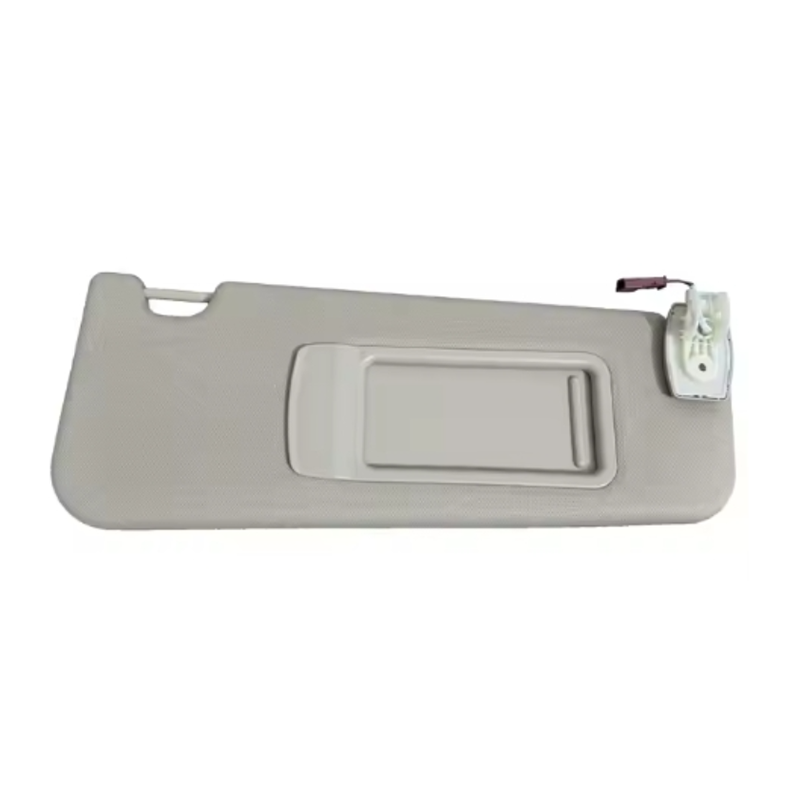
Replacing an overhead visor requires careful material selection. The outward appearance might look identical across different brands. However, the internal skeleton and upholstery choices dictate the actual lifespan of the part. We must evaluate both the core substrates and the covering fabrics.
The core substrate acts as the structural foundation. Older vehicle models frequently utilized MDF (Medium-Density Fiberboard) or compressed cardboard cores. These cheap materials absorb ambient moisture from humid air easily. When the cabin heats up later, the damp cardboard bakes. It warps permanently into wavy shapes. It loses all structural rigidity.
Modern automotive standards mandate better solutions. Injected polypropylene and ABS plastics dominate the premium market. Manufacturers inject these polymers under extreme pressure. They form rigid, honeycomb-like internal skeletons. Polymer cores resist moisture completely. They maintain their flat shape flawlessly even at temperatures exceeding 200°F. Always demand rigid polymer cores for long-term durability.
The exterior material faces daily tactile interaction. Vinyl covers offer superior cleanability. They repel moisture naturally. You can wipe away fingerprint grease with a damp cloth effortlessly. Heavy-duty vinyl resists punctures and tearing exceptionally well.
Woven fabrics provide a different aesthetic appeal. They match luxury vehicle headliners perfectly. However, fabrics absorb dirt, odors, and moisture. They require strict chemical UV-resistant treatments before installation. Without these treatments, woven threads rot and disintegrate quickly under direct sunlight. Choose vinyl for easy maintenance. Choose treated woven fabric strictly for luxury visual integration.
Vehicle specific applications demand tailored material choices. Luxury sedans use heavy, dense upholstery materials. When sourcing a Car Interior Sun Visor for BMW 5 Series F10 F18 51167248855, matching the OEM Alcantara weight is critical. Alcantara is a dense, premium synthetic suede. If an aftermarket manufacturer uses weak adhesives on this heavy material, it will fail prematurely. Gravity will pull the heavy fabric away from the core. You must verify high-temperature industrial glue usage for luxury replacements.
Utility vehicles face entirely different operational hazards. Consider the requirements when replacing a car Sun visor Toyota Tacoma fit OEM74310-04181-E0. Trucks endure severe vibrations from rough terrain. Prioritizing rigid ABS mounting brackets becomes absolutely necessary. Pure plastic brackets will snap under heavy off-road vibration. Furthermore, you should select heavy-duty vinyl covers for trucks. Vinyl survives dusty, high-vibration environments far better than delicate woven cloth.
Windshield shades protect your dashboard from cracking. They keep cabin temperatures manageable. However, the materials used to build these shades vary wildly in quality. Consumers typically choose between basic metallic foils and premium synthetic fabrics.
Bubble-style foil shades dominate discount auto parts stores. They feature a layer of trapped air surrounded by reflective mylar.
Pros: They provide high immediate thermal reflection. The shiny surface bounces sunlight away effectively on day one. They are also incredibly inexpensive to produce.
Cons: Foil structures are highly susceptible to delamination. The metallic layer oxidizes and separates from the plastic backing. Repeated folding creates sharp, hard creases in the material. These creases eventually crack open. They shed metallic flakes all over your dashboard. Bubble styles rarely survive a full multi-season lifespan.
Premium manufacturers use tightly woven synthetic textiles instead of foil. The "T" rating denotes thread density. A 240T rating means 240 threads per square inch.
Pros: High-density nylon offers exceptional flexibility. It features incredible tear resistance. It retains its physical shape perfectly after thousands of folding cycles. It does not crease permanently.
Evaluation standard: You must look for titanium silver coatings bonded directly to 240T nylon. This chemical bonding process prevents the flaking commonly seen in cheaper reflective sprays. The tight weave blocks microscopic light leaks completely.
The most effective thermal barriers use dual-layer construction. Manufacturers bond a highly reflective exterior layer with a black interior backing. The silver exterior bounces ultraviolet radiation away from the glass. The black interior backing absorbs any residual heat bridging the gap. This structural combination creates an impenetrable thermal barrier. It stops conductive heat transfer far more effectively than single-layer foil sheets.
Material Type | Flexibility | UV Resistance | Common Failure Mode | Expected Lifespan |
|---|---|---|---|---|
Aluminum Foil (Bubble) | Low | Moderate | Delamination and flaking | 1 Summer Season |
210T Nylon | High | High | Edge fraying over time | 2-3 Years |
240T Nylon (Dual Layer) | Maximum | Maximum | Internal wire fatigue | 4+ Years |
Consumers often obsess over the main fabric. They ignore the supporting hardware entirely. However, the peripheral components usually dictate the product's actual lifespan. Structural failures almost always start at the edges or hinges.
The perimeter of any fabric shade requires proper sealing. Cheap models use single-stitched cotton thread for edge binding. Cotton is an organic material. It rots quickly under intense UV light. The single stitch eventually breaks. The raw fabric edges fray rapidly. In contrast, premium shades utilize double-stitched nylon thread. Nylon is synthetic and highly resistant to sun rot. The best models feature reinforced fabric piping along the borders. This thick piping protects the internal structural layers from exposure.
Collapsible pop-up shades rely on internal memory wire. You must evaluate the wire gauge thickness carefully. Thin, cheap wires warp permanently under extreme dash heat. Once the wire warps, the shade sags inward. It pulls away from the windshield glass. This gap allows sunlight to pour over your dashboard. High-tensile carbon steel wire behaves differently. It retains its stiff tension indefinitely. It forces the fabric flush against the glass. This flush fitment maximizes thermal reflection.
Built-in visors pivot on mounting clips. Manufacturers mold these clips from various plastics. Pure plastic mounts become extremely brittle during winter months. Cold-weather adjustments often shear them off entirely. You attempt to block morning glare, and the visor snaps off in your hand. Premium replacements feature metal-reinforced pivot joints. An internal steel pin distributes rotational torque safely. These metal-reinforced designs outlast pure plastic mounts by many years.
You need a systematic approach to navigate the aftermarket parts landscape. Haphazard purchasing leads to repeated replacements. Use this logical framework to select durable materials every time.
First, define your exact problem. Are you replacing a broken interior cabin part that swings down from the roof? Or are you sourcing a removable windshield protector to prevent dashboard cracking? Interior replacements demand rigid structural cores. Windshield shades demand flexible, dense textiles. Identify your goal before looking at products.
Keep these non-negotiable material requirements handy while shopping:
Require a minimum of 210T density for any fabric windshield shade. Reject anything lower.
Demand chemically bonded titanium-silver coatings. Avoid painted reflective sprays.
Require UV-stabilized ABS or injected polypropylene plastics for interior visor cores. Reject cardboard entirely.
Verify the use of double-stitched nylon edge binding on fabric products.
Confirm the presence of metal-reinforced pivot pins for built-in replacements.
Precise fitment dictates longevity. Ill-fitting universal shades require forceful bending to cram them behind your rearview mirror. You crush the wire frames daily. You scrape the fabric against plastic pillars. This mechanical stress destroys the shade rapidly. Custom-fit visors alter this dynamic. OEM or precise laser-measured aftermarket shades slide perfectly into place. They require zero forceful manipulation. You endure far less mechanical stress during installation. This exact fitment directly extends the material's lifespan.
Warranties reveal a manufacturer's confidence in their materials. Cheap foil shades rarely offer guarantees. A credible manufacturer relying on high-density nylon and rigid ABS will stand behind their product. They typically offer a minimum 1-year warranty. Ensure the warranty explicitly covers UV degradation, adhesive failure, or structural warping. This guarantees you are purchasing legitimate automotive-grade materials.
Here is a quick reference guide comparing hardware durability factors:
Component | Low-Quality Material | Premium Material | Impact on Lifespan |
|---|---|---|---|
Stitching | Single-stitch Cotton | Double-stitch Nylon | Prevents premature edge fraying and rot. |
Wire Frame | Low-carbon thin wire | High-tensile steel | Maintains flush glass fitment without sagging. |
Pivot Hinges | Solid Plastic | Metal-reinforced pin | Prevents snapping during cold weather usage. |
Evaluating shade materials properly saves you from constant replacements. We must prioritize structural integrity over cheap aesthetics. Demand ABS polymer cores and high-tensile steel memory wire. Insist on UV-treated synthetics like 240T Nylon and heavy-duty vinyl upholstery. These materials withstand the brutal thermal cycling and mechanical wear of daily driving. You should strictly avoid cheap, reflective gimmicks like bubble-wrap foil or cardboard substrates.
Your next step is straightforward. Locate your vehicle's specific exact OEM part number for interior replacements. If you need a windshield shade, measure your glass dimensions carefully. Use these exact measurements to order a custom-fit, high-density fabric shade. Investing in accurate fitment and premium materials ensures your interior remains protected for years to come.
A: An outward-facing silver or white surface is necessary for optimal optical reflection. It bounces heat away effectively. However, the color itself matters far less to physical durability than the material's UV-resistance rating. A properly UV-treated black nylon shade will outlast a cheap, un-treated silver foil shade every time.
A: Built-in visors sag due to brutal cabin temperatures. High heat dries out the internal adhesives holding the fabric to the core. Additionally, cheap older visors use cardboard cores. Ambient humidity softens the cardboard, and extreme heat warps it permanently. This combination causes the material to separate and droop.
A: Replacing the unit is generally better. Re-gluing degraded fabric onto a warped core rarely holds up against cabin heat. Replacing the entire assembly with an exact fit OEM or high-grade aftermarket part is safer. It provides structural integrity and proves far more durable than temporary adhesive repairs.


