

close
Choose Your Site
Global
Social Media


Views: 0 Author: Site Editor Publish Time: 2026-07-30 Origin: Site


Replacing a failed, sticky, or poorly designed car cup holder is a common frustration for many daily drivers. You grab a hot morning coffee, drop it into the center console, and immediately endure annoying rattles. Consumers constantly face a primary material decision when upgrading. They must choose between rigid plastic or flexible silicone. The stakes are surprisingly high for interior comfort. Choosing the wrong material leads to rattling beverages, warped inserts during intense summer heat, or poor fitment. These flaws quickly degrade the vehicle's interior aesthetic and driving experience. Our objective is to provide an objective, evidence-based framework. We will evaluate silicone against plastic cup holder inserts. We guide you to the exact replacement or upgrade suitable for your specific vehicle and daily usage habits. You will learn how thermal resistance, precision fitment, and noise suppression dictate ultimate accessory performance.
Plastic excels in OEM restoration: Best for rigid, exact-fit replacements (e.g., restoring a center console to factory condition), but cheaper variants risk cracking and offer poor grip.
Silicone dominates in utility and NVH reduction: Ideal for noise suppression (anti-rattle), spill containment, and easy cleaning, though universal fits often fail to match exact console dimensions.
Fitment dictates success: An exact-measurement rigid plastic insert outperforms a poorly sized "universal" silicone mat.
Thermal resistance is non-negotiable: Both materials must be automotive-grade to withstand extreme cabin temperatures without off-gassing or warping.
Daily driving subjects your center console to intense environmental stress. We often ignore this small interior component until it fails. Understanding why factory inserts deteriorate helps you choose a superior replacement material. Automotive engineers test interior components against rigorous standards. However, daily use introduces variables they cannot always predict.
Three primary factors cause factory inserts to fail prematurely:
Thermal Cycling: Vehicle cabins experience extreme temperature fluctuations. A car parked in direct summer sunlight easily reaches 140°F (60°C). Winter nights plunge below freezing. This continuous expansion and contraction weakens inferior materials over time.
Chemical Breakdown: Spilled coffee, acidic sodas, and energy drinks pool at the bottom. These liquids slowly degrade surface coatings. They eat away at soft-touch rubber finishes. The result is a permanently sticky surface.
Physical Stress: Modern insulated tumblers are incredibly heavy. Forcing oversized steel bottles into undersized slots applies outward pressure. This stress eventually snaps plastic retaining clips or tears rubber linings.
Buyers must balance aesthetic priorities against functional requirements. You want your interior to look cohesive. Luxury vehicles demand factory-matching finishes. However, practicality remains crucial. You need strong grip and reliable spill management. Prioritizing looks over function often results in frustrating drink spills.
Many consumers fall into the "universal fit" trap. You should approach one-size-fits-all claims with extreme skepticism. Center consoles vary drastically across vehicle makes and models. A generic round insert rarely fits a uniquely shaped factory slot. Measuring exact console tolerances prevents wasted money. Precision matters more than marketing claims.
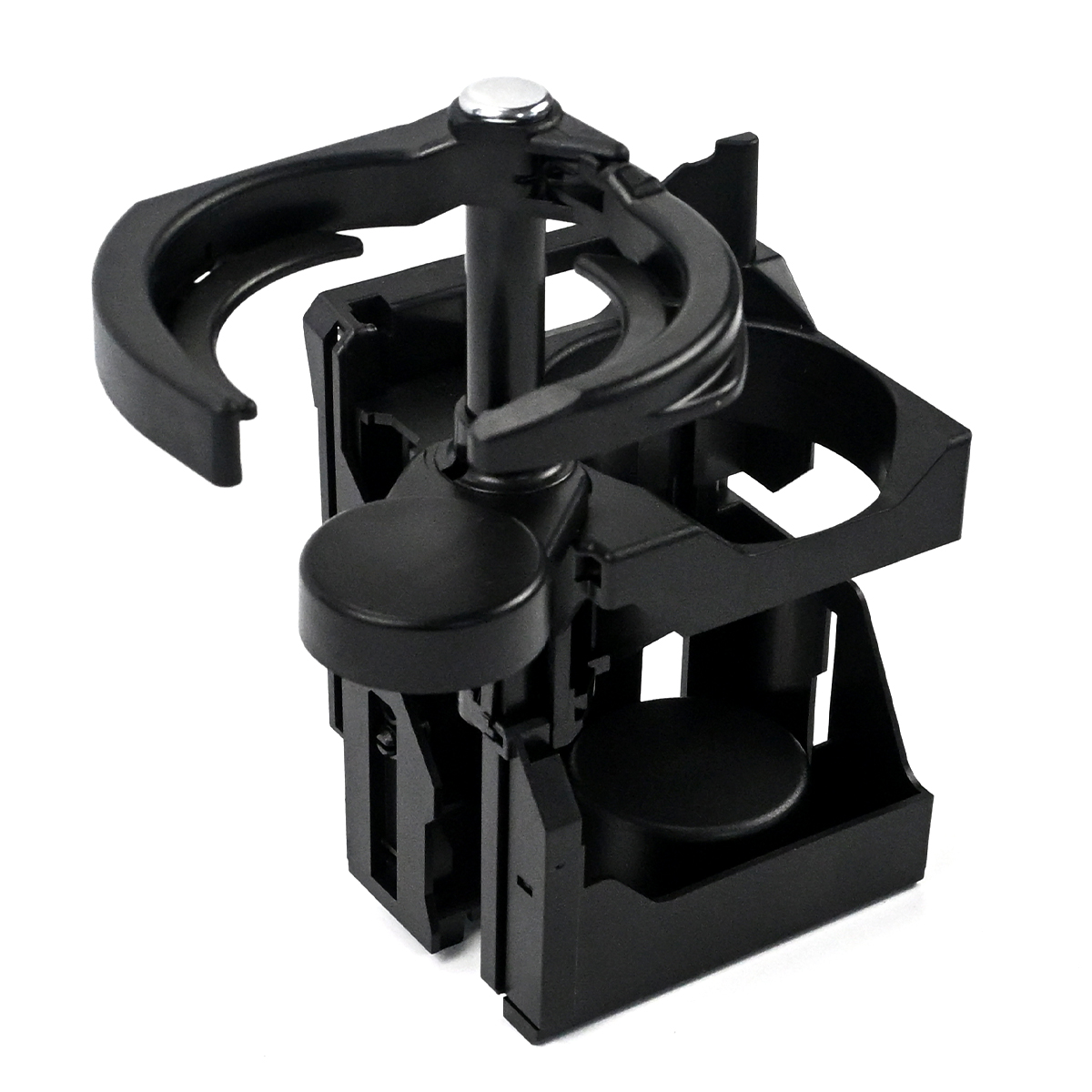
Rigid plastic inserts serve a very specific purpose in automotive restoration. They excel at structural replacement. You should choose rigid plastic when your actual console housing cracks or goes missing. Plastic restores the physical foundation of the storage area. It offers unmatched structural integrity.
Automotive manufacturers rely on injection-molded plastics to maintain exact interior dimensions. They use high-grade ABS plastic for its dimensional stability. If you want a flawless interior, you must follow the OEM replacement standard. Exact-fit factory replacement parts guarantee proper alignment.
For example, restoring a classic luxury sedan requires precise components. You might need a Cup Holder Replacement 2106800114 for Mercedes Benz e300 to fix a broken folding mechanism. Alternatively, installing a 2036800879 Black Car Accessory Cup Holder Drink Holder for Mercedes Benz W203 restores the center console perfectly. These specific components match factory textures. They restore luxury interiors without compromising original design language.
However, implementing hard plastic carries notable risks. Hard plastic offers absolutely zero vibration dampening. A steel travel mug resting against hard ABS plastic will rattle continuously. This noise frustrates many drivers during long commutes. Furthermore, cheap aftermarket plastics pose durability risks. Low-grade ABS is highly prone to UV degradation. It becomes brittle after prolonged sun exposure. Winter weather also causes cheap plastic to crack under pressure. You must verify material quality before purchasing rigid replacements.
Silicone inserts prioritize daily utility over structural support. They are designed specifically for interior protection and noise reduction. These flexible liners serve high-frequency use cases perfectly. Daily coffee commuters benefit immensely from silicone upgrades. You drop them directly into existing console slots to enhance functionality.
The performance advantages of automotive-grade silicone are substantial. First, silicone provides a remarkably high friction coefficient. This grippy surface prevents top-heavy drinks from tipping during sharp turns. Second, it offers superior thermal stability. High-quality silicone withstands extreme cabin temperatures. It does not melt into a sticky mess. It resists cracking in sub-zero weather. Third, silicone liners simplify maintenance. You can remove them easily. Most are completely dishwasher-safe for deep cleaning.
Despite these benefits, silicone implementation carries specific risks. Silicone naturally attracts dust, lint, and stray pet hair. You will notice debris accumulation quickly. Flimsy, low-quality silicone liners introduce another frustrating problem. They can fold inward or pull out completely. This happens when you remove a tightly wedged paper coffee cup. The liner sticks to the cup base and lifts out of the console. To prevent this, you must choose thick, heavyweight silicone designs. Some premium options utilize textured bottoms to grip the console plastic securely.
Evaluating these two materials requires a structured approach. We compare them across four critical dimensions: noise reduction, maintenance, installation, and longevity. This framework removes guesswork from your purchasing decision.
Noise, Vibration, and Harshness (NVH) remains a top concern for automotive engineers. Silicone excels here. It naturally absorbs vibrations from the road. It silences rattling keys, coins, and steel bottles. Plastic performs poorly in this category. Hard plastics amplify vibrations. They turn minor road bumps into noticeable cabin noise.
Maintenance and hygiene requirements differ drastically between materials. Silicone requires frequent light cleaning. It shows dust readily. However, it is fundamentally easier to wash under a sink faucet. Plastic hides dry dust better. Yet, plastic becomes a nightmare if sticky liquids pool at the bottom. Cleaning hardened soda out of deep plastic crevices requires harsh chemicals and heavy scrubbing.
Installation methods dictate long-term stability. Plastic replacements often require clipping into complex console mechanisms. This means harder installation processes. You might need trim removal tools. However, once installed, plastic is permanent and highly secure. Silicone is usually a simple drop-in solution. Installation takes seconds. The trade-off is lower security. Unless the silicone features a self-adhesive backing, it may shift during aggressive driving.
Longevity under extreme temperatures heavily favors premium silicone. High-quality vulcanized silicone outlasts standard injection-molded plastic in direct sunlight. UV rays slowly degrade plastic polymers. Silicone resists UV radiation naturally. It maintains its flexibility and color for years.
Material Comparison Overview
Evaluation Criteria | Rigid Plastic Inserts | Flexible Silicone Inserts |
|---|---|---|
NVH Reduction | Poor (Amplifies rattles) | Excellent (Absorbs vibrations) |
Installation Difficulty | Moderate to High (Clips/screws) | Very Low (Drop-in) |
Spill Management | Hard to clean deep crevices | Easy to remove and wash |
Structural Support | High (Can replace broken housing) | None (Requires existing housing) |
Thermal Durability | Prone to UV fading and cracking | Highly resistant to heat and cold |
Selecting the perfect upgrade requires a systematic evaluation of your current interior. Follow this logical progression to identify your ideal product.
Assess the baseline problem: You must first diagnose the actual issue. Is your factory holder physically broken, cracked, or missing mechanical parts? If yes, choose an exact-fit rigid plastic replacement. Structural integrity comes first. Is the console structurally sound but just dirty, slippery, or noisy? If yes, choose a drop-in silicone liner to enhance grip.
Verify compatibility: Never guess your console dimensions. Grab a tape measure. Measure the bottom diameter and maximum depth of your factory slot. Reject any online products lacking exact millimeter or inch dimensions. "Universal fit" is a marketing myth. You need precise measurements to ensure secure seating.
Evaluate vendor trustworthiness: Look beyond generic product descriptions. Search for automotive-grade material certifications. You want high-temp ABS plastic or food-grade/high-temp silicone. Avoid generic consumer plastics. Cheap materials off-gas toxic odors when exposed to intense summer heat inside a parked car.
Consider retention mechanisms: Decide how the insert should secure itself. Analyze your specific driving conditions. Do you corner aggressively? You might need a silicone insert featuring self-adhesive backing. Do you prefer easy removal for cleaning? Choose a heavy-weight friction-fit silicone mat. Do you need a permanent factory restoration? Mechanical plastic clips remain your best option.
By following these steps, you eliminate incompatible products early. You focus only on solutions designed for your specific driving environment. This methodology guarantees a cleaner, quieter, and more functional center console.
Upgrading your vehicle's interior storage demands a thoughtful approach to material selection. The final verdict depends entirely on your current console condition. You should choose exact-fit plastic for structural console repairs. Plastic excels at maintaining luxury OEM aesthetics and structural rigidity. Conversely, you should opt for silicone when upgrading a functional but noisy console. Silicone prevents irritating rattles, protects against sticky spills, and accommodates varying cup sizes with superior grip.
Your next step is simple and actionable. Grab a measuring tape and measure your current console dimensions accurately. Then, check vehicle-specific forums to verify fitment before completing any purchase. Taking five minutes to measure guarantees a perfect fit and eliminates the frustration of returning incompatible accessories.
A: High-quality, automotive-grade silicone does not melt in hot cars. It easily withstands temperatures exceeding 400°F (200°C). However, cheap rubber or low-grade silicone blends may warp, become sticky, or off-gas toxic odors under extreme cabin heat. Always verify the manufacturer uses high-temperature vulcanized silicone.
A: Avoid harsh chemical solvents like acetone. They strip OEM plastic finishes and cause discoloration. Instead, use a mixture of warm water and mild dish soap. Let the soapy water sit for five minutes to soften hardened sugars. Wipe it clean using a microfiber cloth or a soft-bristled detailing brush.
A: No. Universal inserts rarely fit perfectly. Center consoles vary significantly in diameter, depth, and taper across different car models. A generic insert often leaves gaps or bunches up at the edges. You should always measure your console and buy inserts matching your specific millimeter dimensions.
A: No, silicone liners cannot fix broken plastic. Silicone is entirely flexible and offers zero structural support. If your factory plastic housing is cracked or missing retaining clips, you must install a rigid plastic replacement first. Silicone liners only work when placed inside an intact structural base.


