

close
Choose Your Site
Global
Social Media


Views: 0 Author: Site Editor Publish Time: 2026-07-16 Origin: Site


We all know the daily frustration of massive 32oz water bottles rolling across passenger seats. You hit the brakes hard in heavy traffic. Suddenly, your heavy drink goes flying onto the dirty floorboard. It creates an immediate mess. It severely distracts you while driving.
Standard vehicle consoles suffer a major structural mismatch against modern daily hydration habits. Automakers originally designed these interior slots specifically for 12oz soda cans. They also fit standard disposable coffee cups perfectly. However, they simply cannot accommodate popular oversized gear from Yeti, Hydro Flask, or Nalgene. You cannot fit these large containers securely without precarious squeezing and inevitable scratching.
Fixing this annoying issue requires evaluating your exact vehicle-specific base dimensions. You must also check tight interior clearance constraints carefully. We will explore how to choose smartly between aftermarket expanders and direct console replacements. You will learn practical strategies to measure your console space. Finally, you will secure those giant drinks safely.
Standard vehicle cup holders average 2.75 to 3.15 inches in diameter, while popular 32oz–40oz bottles require 3.4 to 3.8 inches of clearance.
Adjustable-base expanders are the most versatile solution but require checking offset clearance to avoid blocking gear shifters or adjacent cup holders.
For broken or inadequately sized legacy consoles (particularly older trucks), installing a durable split center seat front cup holder is required before adding large bottle adapters.
Material quality, base expansion range, and rubberized retention tabs are the core indicators of a stable, rattle-free setup.
Understanding the exact physical limitations of your vehicle interior is crucial. Most modern vehicles feature restrictive factory console spaces. Automotive engineers typically design these slots for maximum space efficiency rather than bulk hydration. We see this limitation clearly when measuring the actual physical space provided.
Automakers adhere strictly to legacy beverage sizing standards. A standard factory console slot usually maxes out around 3.15 inches in diameter. Some compact cars feature slots as narrow as 2.75 inches. Furthermore, the maximum depth typically hovers around 2.5 inches. This shallow depth creates severe stability issues for taller items. When you place a tall, heavy item into a shallow space, it becomes highly susceptible to tipping.
You can easily verify these dimensions in your own vehicle. Use a standard measuring tape across the top opening. You will likely find the space perfectly fits a disposable paper coffee cup. However, it fails completely when introduced to heavy-duty, reusable metal containers.
Modern hydration trends favor massive capacities. These larger volumes require significantly wider bases. You must account for these exact measurements before buying any interior accessory. For example, a 40oz Hydro Flask features a base diameter of approximately 3.58 inches. A popular 36oz Yeti Rambler demands even more room, measuring roughly 3.75 inches across. Classic Nalgene 32oz bottles require at least 3.5 inches of horizontal clearance.
Common Beverage Container Dimensions
Bottle Type / Size | Approximate Base Diameter | Fitment in Standard Slot |
|---|---|---|
Standard Soda Can (12oz) | 2.60 inches | Perfect Fit |
Standard Coffee Cup (16oz) | 2.35 inches | Perfect Fit |
Hydro Flask (32oz) | 3.58 inches | Does Not Fit |
Yeti Rambler (36oz) | 3.75 inches | Does Not Fit |
Nalgene Wide Mouth (32oz) | 3.50 inches | Does Not Fit |
You might feel tempted to jam a slightly oversized bottle into a tight factory slot. This approach causes immediate and long-term damage. Forcing a large metal bottle into a rigid plastic slot causes severe console scratching. It also causes permanent bottle denting over time.
Furthermore, forcing an incorrect fit creates top-heavy instability during transit. The rigid plastic walls cannot grip the metal container properly. When taking a sharp turn, the heavy top portion leverages against the shallow base. The bottle will eventually pry itself loose and become a dangerous projectile inside the cabin. A well-designed car cup holder adapter prevents this dangerous leveraging effect entirely.
Aftermarket manufacturers solved this dimension gap by creating mechanically expandable adapters. These clever devices bridge the gap between tiny factory slots and massive hydration jugs. They offer a versatile, non-permanent solution for most daily drivers.
These units utilize a highly effective mechanically expanding base. The user twists a central dial located inside the upper chamber. This twisting action pushes three or four rigid plastic pads outward. The pads press firmly against the interior walls of your factory console. This outward pressure locks the entire unit securely in place.
Once locked, the upper tier provides a substantially wider receptacle. This top section easily swallows 40oz containers. Because the base mechanism grips tightly, the entire structure remains completely rigid during sharp turns.
Not all aftermarket expanders offer the same level of security. You must evaluate several key features before trusting an adapter with a heavy 40oz jug. Poor quality models often rattle loosely or fail to expand sufficiently.
Base Expansion Range: The mechanism must contract down to at least 2.5 inches. It must also expand outward to over 3.75 inches. This wide range ensures tight locking across different vehicle brands.
U-Shaped Slots: Many commuters prefer carrying large coffee mugs. Look for adapters featuring deep U-shaped cutouts along the top rim. These slots accommodate thick mug handles effortlessly.
Rubberized Friction Tabs: Bare plastic against bare metal creates terrible rattling noises. Quality adapters utilize soft rubberized tabs around the top rim. These flexible tabs grip the metal bottle securely. They keep it from rattling or ejecting on rough terrain.
You must remain aware of potential implementation risks. The primary risk involves top-heaviness. By raising the floor of your beverage slot, you shift the center of gravity much higher. You must ensure the expanding base grips aggressively to counter this new leverage.
Additionally, always check dashboard clearance. The expanded top tier might impede access to climate controls or gear shifters. A common mistake involves installing a massive adapter directly in front of a manual transmission shifter. Always test your hand clearance before driving.
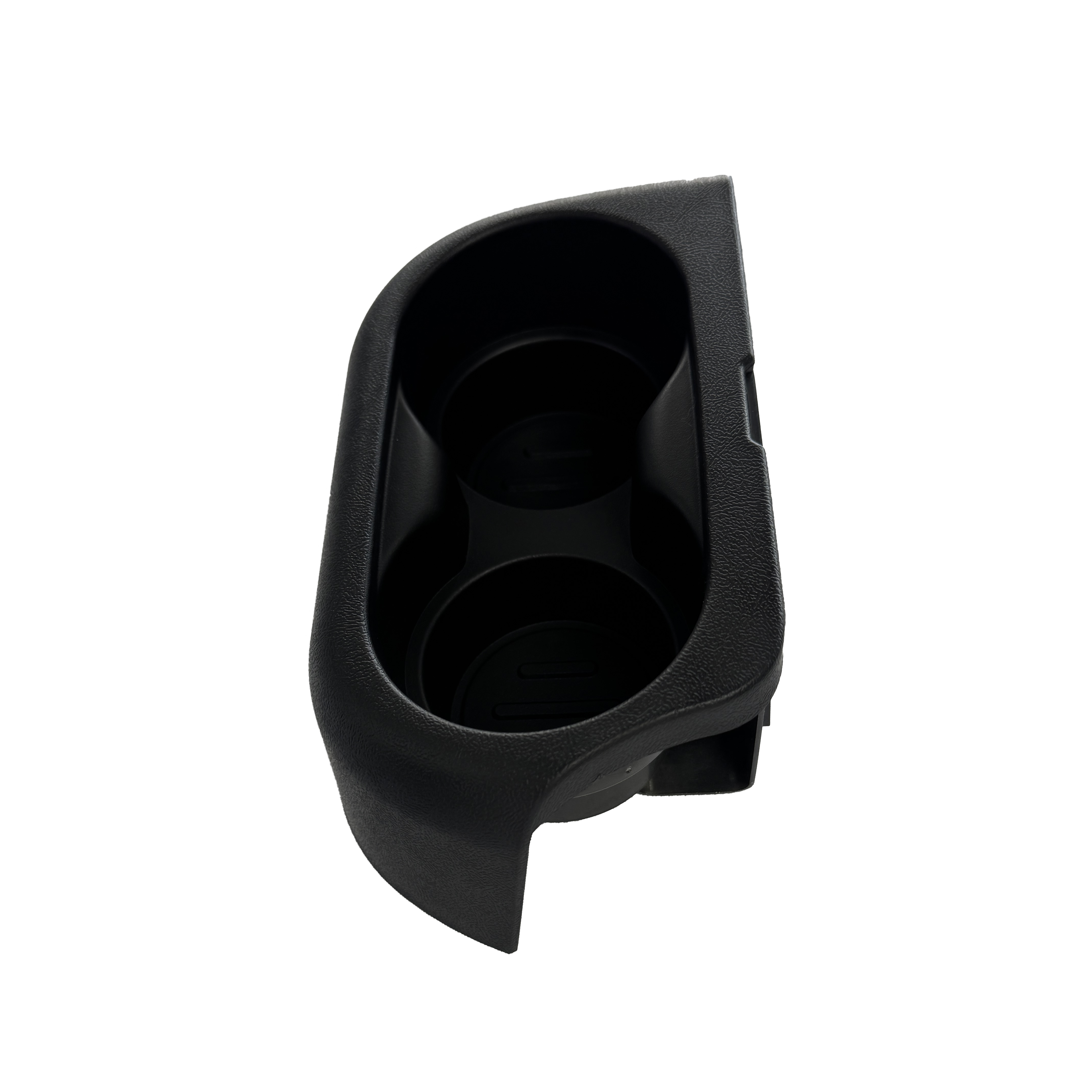
Sometimes, an aftermarket expander simply will not work. You cannot build a sturdy structure on a broken foundation. Many older vehicles suffer from heavily degraded interior plastics. In these specific scenarios, you must replace the baseline hardware entirely.
Factory plastics become incredibly brittle after years of intense UV exposure. The original factory console often becomes damaged, loose, or entirely missing. This deterioration happens frequently in older pickup trucks and high-mileage fleet vehicles. The internal spring-loaded retention clips break off easily. The side walls crack under pressure.
If you insert a mechanical expander into a cracked factory slot, you will only worsen the damage. The outward pressure from the expander will split the brittle plastic further. You must address the worn-out foundation first.
You must frame replacing the baseline hardware as a mandatory primary step. Restoring the structural integrity of the console ensures safe driving. Automakers provide direct-fit replacement inserts designed to snap seamlessly into the original mounting points.
For example, if you drive a classic Ford truck, fixing a broken center console is essential. You might consider installing a 4L5Z1013562AAB Replacement Front Split Bench Center Cup Holder designed for compatible Ranger or F-Series models. This direct-fit replacement restores your factory utility perfectly. You must complete this vital step before attempting to carry oversized drinks.
When selecting replacement parts, material quality matters immensely. You want components capable of enduring daily abuse. We emphasize the absolute necessity of sourcing a Durable Split Center Seat Front Cup Holder constructed from high-impact ABS plastic. This robust material resists cracking effectively. It also features strong retention clips designed to handle heavier fluid weights without buckling.
Best Practice: Always remove old, broken plastic debris from the mounting cavity before installing a new insert. Small plastic shards can prevent the new clips from locking down properly.
You need a systematic approach to choose the right solution. Guessing dimensions usually leads to frustrating returns and spilled drinks. By following a strict decision framework, you ensure perfect fitment on the first try.
Never rely on visual estimates when modifying your console. You need precise numbers to match against product specifications. Grab a flexible measuring tape or a small ruler.
Measure the Top Diameter: Stretch your tape measure directly across the widest point of the top opening. Record this number exactly.
Measure the Bottom Diameter: Many slots taper inward at the bottom. Push your ruler down to the floor of the slot. Measure the width at the very bottom base.
Measure the Total Depth: Plunge the ruler straight down from the top rim to the floor. If the depth falls below 2.5 inches, you will likely need an adapter featuring a heavily weighted base for extra stability.
Standard cylindrical expanders often fail in modern vehicles. Automakers frequently place two beverage slots very close together. If you insert a wide cylindrical adapter into one slot, its wide upper rim will completely block the second slot.
To solve this, manufacturers created offset adapter designs. An offset design features an asymmetrical upper tier. The wide top section shifts outward, away from the central axis of the base. This clever geometry prevents the adapter from blocking the secondary slot. It also prevents the top tier from obstructing the center console lid or the main gear shifter.
Every vehicle cabin presents unique geometric challenges. You must inspect your specific dashboard layout carefully before purchasing.
Recessed consoles sit deep within a surrounding plastic housing. An offset adapter works best here because it pushes the wide bottle up and out of the recessed hole. Conversely, pop-out dashboard trays present a massive problem. These flimsy trays extend outward from the stereo area. They rely on thin plastic arms for support. You should never use a heavy adapter in a pop-out tray. The leveraged weight will snap the plastic arms instantly.
Common Mistake: Ignoring overhead clearance. If your console sits directly beneath the stereo interface, a 12-inch tall 40oz bottle might smash into your climate control dials.
Now you understand the dimensions, the risks, and the available parts. You can narrow down your choices based on your specific driving habits. Different vehicles demand different strategic approaches.
You likely drive a modern sedan or a compact SUV. These vehicles typically feature closely spaced center slots. You carry a 32oz insulated tumbler to the office every morning.
You should recommend an offset, adjustable-base expander. Look specifically for models featuring soft silicone interior grips. The offset design keeps your passenger's beverage slot completely open. The silicone grips prevent annoying metal-on-plastic rattling during your quiet morning commute.
You drive an older, reliable work truck. The interior has seen years of tough duty. The original plastic inserts are cracked, missing, or terribly loose.
You must validate your OEM part numbers first. Skip the aftermarket expanders entirely for now. You must replace the broken console insert first to establish a secure foundation. Snap a fresh, high-impact ABS plastic replacement into the bench seat slot. Once you restore the factory strength, you can safely explore adding expandable adapters for larger thermoses.
You work outdoors or travel long distances. You rely on massive 40oz or 64oz hydration jugs to survive the day. These containers weigh several pounds when fully loaded with ice and water.
You must advise shortlisting only adapters featuring deliberately weighted bases. A lightweight plastic base cannot anchor a 4-pound jug safely. Furthermore, demand a minimum 3-inch insertion depth. The base mechanism must reach deep into the factory slot to gain sufficient leverage. This deep mechanical anchoring prevents catastrophic tipping during emergency braking.
Fitting a large bottle safely into your vehicle requires careful evaluation. It remains an exercise in measuring both the exact bottle base and your car's specific console geometry. You cannot simply force modern hydration gear into legacy automotive designs without risking damage and dangerous distractions.
We encourage you to follow these straightforward action steps:
Measure your factory slot depth and diameter accurately using a ruler.
Assess the health of your factory plastics and replace broken inserts immediately.
Choose an offset expander if your vehicle features closely grouped beverage slots.
Prioritize physical stability and secure mechanical locking over flashy aesthetics.
By upgrading your interior hardware correctly, you ensure safe, distraction-free driving. You can finally enjoy your daily commute without constantly grabbing a falling water bottle.
A: Not if it uses soft silicone or rubber expansion pads. These flexible materials grip firmly without leaving marks. However, hard plastic expanders over-tightened in a factory holder can cause severe scuffing or cracking. Always expand the mechanism gently until snug.
A: Without an adapter, most standard car cup holders safely hold containers up to 3.15 inches in diameter. This limitation typically restricts you to 20oz to 24oz standard bottles or 16oz disposable coffee cups. Anything larger requires precarious squeezing.
A: Generally, no. Flimsy pop-out mechanisms lack the necessary structural rigidity. They cannot support the massive leveraged weight of a full 32oz+ bottle resting inside a heavy adapter. These pop-out trays will snap. Adapters are intended strictly for sturdy center-console use only.


