

close
Choose Your Site
Global
Social Media


Views: 0 Author: Site Editor Publish Time: 2026-02-25 Origin: Site


We've all been there. You take a sharp turn, and suddenly your prized insulated water bottle goes rogue, rolling off the passenger seat and thudding against the floor. It’s a universal frustration that highlights a growing disconnect in design. As personal hydration trends move toward larger, more capable bottles, automotive interiors often struggle to keep up. The term "standard" has become anything but, leaving drivers to guess which containers will fit securely and which are destined for the passenger-side footwell.
This guide cuts through the confusion. We are not here to guess; we are here to provide a data-driven framework for matching your favorite water bottle to your vehicle's specific dimensions. By understanding the nuances of diameters, depths, and holder designs, you can eliminate spills, distractions, and the dreaded rolling bottle. You will learn how to measure your current setup, evaluate different bottle types, and find the perfect solution—whether that’s a new tapered tumbler or a clever adapter—to ensure your hydration stays put, promoting both convenience and driving safety.
Standard Diameter: Most car cup holders range between 2.5" and 3.25" in diameter.
The Taper Advantage: Bottles with tapered bases (like the Stanley 40oz or certain tumblers) fit standard holders despite large upper volumes.
The "Boot" Factor: Silicone protective boots add approximately 0.25" to a bottle's diameter, often turning a "fit" into a "fail."
Expansion Solutions: For wide-mouth bottles (32oz+), high-quality adapters with offset bases are the professional solution for double-hole configurations.
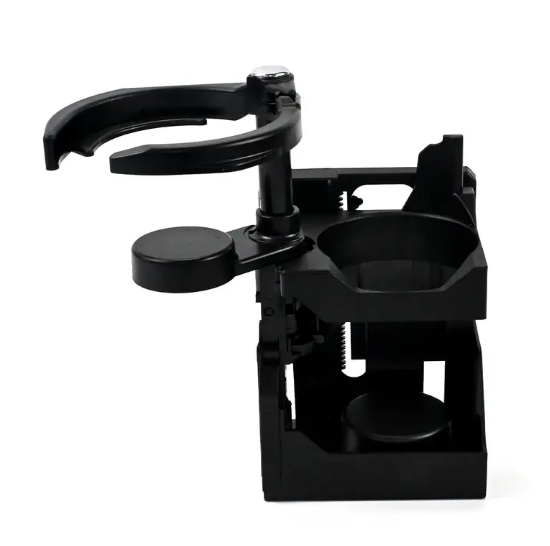
The first step to solving the fitment puzzle is recognizing that not all cup holders are created equal. The term "standard" provides a useful baseline, but the reality inside modern vehicles is far more diverse. Understanding the different types and their limitations is critical to finding a secure solution.
When people refer to a standard cup holder, they are generally talking about the circular wells found in the center console of most sedans, trucks, and SUVs. These are designed to be versatile, accommodating everything from a disposable coffee cup to a soda can. The key specifications are:
Diameter: Typically falls within a range of 2.5 to 3.25 inches (approximately 63mm to 82mm). The lower end of this range fits a standard 12oz can perfectly, while the upper end is meant for larger fountain drinks.
Depth: Usually between 2 to 3.5 inches deep, providing enough stability for taller, less top-heavy containers.
Features: Often includes spring-loaded tabs or flexible rubber "fins" that retract to grip containers of varying sizes, preventing them from rattling.
This design works exceptionally well for its intended purpose. However, the rise of heavy, wide-diameter insulated water bottles exposes its limitations.
Automakers frequently use other spaces for beverage storage, leading to several non-standard designs, each with its own set of challenges.
Molded into the interior door panel, these holders are often wider and more oblong than their center console counterparts. While their generous width might seem promising for larger bottles, they are almost always much shallower. This lack of depth makes them unstable for tall or top-heavy vessels, which can easily tip over and fall out when the door is opened or closed. They are best reserved for standard 16.9oz plastic water bottles or smaller items.
Found in older vehicles or some minivans, these holders pop out from the dashboard. Their primary weakness is a low weight limit. They are constructed from lighter plastic and are not engineered to support the heft of a full 32oz or 40oz stainless steel bottle. Placing an oversized bottle in one of these risks breaking the mechanism entirely. They are generally restricted to narrow, lightweight containers like a 12oz can or an 18oz bottle at most.
Some vehicles, particularly certain European models, feature square or rectangular cup holders. These designs can be problematic for round bottles, which may not sit securely without adaptable inserts. If your car has geometric holders, you will rely heavily on the effectiveness of its flexible fin inserts to hold your bottle snugly. If the fins are worn or weak, your bottle will likely slide and rattle during transit.
Diameter is only half the story. The depth of a cup holder is just as important for stability. A holder that is too shallow will not be able to support a tall bottle, regardless of whether the base fits. This creates a high center of gravity, making the bottle top-heavy. During routine driving maneuvers like cornering or braking, this instability can cause the bottle to wobble and spill, even if it doesn't fall out completely. A good car cup holder should be deep enough to grip at least the bottom third of your beverage container for optimal stability.
Once you understand your vehicle's cup holders, the next step is to measure your water bottle. Bottles can be grouped into three main categories based on their base diameter, which directly predicts their compatibility with standard automotive holders.
Bottles in this category are the most compatible and hassle-free choice for in-car hydration. Their slender profile is specifically designed to fit nearly any standard holder without issue.
Common Sizes: This group includes most 18oz, 21oz, and 24oz standard-mouth insulated bottles, as well as many 20oz travel tumblers.
Compatibility: These vessels fit comfortably in an estimated 99% of factory cup holders found in center consoles. You can place them with confidence, knowing they will be secure.
Best Use Case: Ideal for commuters, daily errands, and anyone who prioritizes guaranteed fitment over maximum volume.
This is where most fitment issues arise. This category includes some of the most popular high-capacity bottles on the market, whose wide bases often exceed the limits of a standard cup holder.
Common Sizes: Includes the popular 32oz and 40oz wide-mouth bottles from brands like Hydro Flask and Nalgene, which often have base diameters around 3.5 to 3.6 inches.
The Tapered Solution: Bottle manufacturers have recognized this conflict. Many newer tumblers (like the popular 40oz Stanley Adventure Quencher) feature a clever design: a large upper body for high volume that transitions to a narrower, tapered base. This base is intentionally designed to be under 3.25 inches, allowing it to fit securely in most cup holders while still offering significant capacity. When shopping for a large-volume bottle, always check if it has a tapered base.
These bottles are built for maximum hydration and are never intended to fit in a standard cup holder without assistance. Forcing them is not an option.
Common Sizes: This includes 64oz growlers, heavy-duty jugs, and some large coffee mugs with wide, flat bottoms.
Risks of Forcing Fitment: Attempting to jam an oversized bottle into a holder can cause significant damage. You risk cracking the plastic trim, breaking the internal tension springs, or permanently warping the holder's structure. This can lead to a costly repair of the entire center console assembly. A proper adapter is the only safe and effective solution.
To simplify this, here is a quick reference table:
| Vessel Category | Base Diameter | Common Examples | Fitment Solution |
|---|---|---|---|
| Narrow Vessels | Under 3.0" | 18/21/24oz Bottles, 20oz Tumblers | Fits 99% of Standard Holders |
| Wide Vessels | 3.0" – 3.8" | 32/40oz Wide-Mouth Bottles | Requires Tapered Base or Adapter |
| Oversized Vessels | Over 3.8" | 64oz Growlers, Large Jugs | High-Quality Adapter Required |
Many vehicles come equipped with a side-by-side double hole cup holder, which presents a unique spatial challenge. Even if you find an adapter that allows your 40oz bottle to fit into one holder, its wide body often overhangs and completely blocks the adjacent holder. This "proximity problem" prevents you or a passenger from using the second spot. Fortunately, specialized adapters are designed to solve this very issue.
When selecting a cup holder adapter, especially for a double-hole configuration, look beyond basic fitment. The best adapters incorporate thoughtful design features that enhance usability and durability.
Offset Base Design: This is the most critical feature for resolving the double-holder conflict. An offset adapter has a base that sits off-center from the upper cradle. When placed in the holder, it shifts the entire bottle sideways, moving its center point away from the adjacent holder. This clever engineering creates the necessary clearance for a second container—or simply provides better access to console controls.
Expansion Mechanisms: A good adapter needs to grip your car's cup holder tightly. There are two primary mechanisms:
Twist-to-Lock: These adapters have a base that expands when you twist the upper portion. Three or more extending arms press against the sides of the holder, creating a very secure, customized fit. This is often the most stable option.
Friction-Fit Silicone: Other designs use a stepped or finned silicone base that relies on friction. While easier to insert and remove, its stability depends on a close match between the adapter's base size and your car's holder size.
Material Integrity: The inside of a car can reach extreme temperatures, especially in the summer. This makes material choice vital. Avoid cheap, 3D-printed adapters made from PLA plastic, as they can warp, soften, or even melt in a hot cabin. Prioritize adapters made from high-heat resistant materials like ABS plastic or robust recycled polypropylenes. These materials maintain their structural integrity and will last for years.
Sometimes, the problem isn't the bottle—it's the cup holder itself. Over time, components can wear out, break, or become damaged, rendering them ineffective. In these situations, you must decide whether to use an adapter as a workaround or opt for a full replacement.
An adapter is a great solution for an undersized but functional cup holder. However, a replacement is the better long-term choice if you identify these issues:
Broken Tensioners: The spring-loaded tabs or fins that grip your drink are broken or have lost their tension. Your drinks now rattle and slide around loosely.
Cracked Housings: The plastic structure of the cup holder itself has visible cracks, compromising its strength and ability to hold weight.
Permanent Stains or Damage: Years of spills have left the holder sticky, stained, or damaged beyond effective cleaning.
In these cases, an adapter will only sit inside a broken foundation. A full replacement restores the original functionality and aesthetics of your vehicle's interior.
When replacing a part, using an Original Equipment Manufacturer (OEM) or high-quality equivalent component is crucial for ensuring a perfect fit and function. Each vehicle model has a unique console design, requiring a specific part number. For instance, a classic luxury vehicle might require a specific cup holder replacement 2106800114 to match its interior perfectly. Searching by your car's year, make, and model is the best way to find the correct part.
Replacing a center console cup holder is often more involved than it seems. The process may require disassembling a portion of the center console, which is typically held together by hidden clips and screws. It is important to proceed with caution and use appropriate trim removal tools to avoid scratching or breaking plastic panels. Losing or breaking retention clips can result in a console that squeaks, rattles, or no longer fits together flush.
When making your decision, consider the total cost. A quality cup holder adapter typically costs between $20 and $30 and solves the immediate problem of fitting a large bottle. An OEM housing replacement can range from $50 to over $150, plus potential labor costs if you choose professional installation. For a simple fitment issue, an adapter is the economical choice. For a broken or damaged holder, the investment in a replacement restores the value and functionality of your car.
A secure bottle is only one part of safe in-car hydration. The features of the bottle and its lid play a significant role in minimizing distractions and keeping your focus on the road.
Any action that requires two hands while driving is a potential hazard. Unscrewing a traditional bottle cap is a two-handed job that takes your eyes off the road. The best water bottles for driving are those that allow for one-handed operation. Look for lids with:
Flip-Top Straws: A simple flick of the thumb reveals a straw, making it easy to sip without tilting your head or the bottle, which helps maintain visibility.
Push-Button Lids: Lids that open with the press of a button (often called "autoseal" or "autospout") are equally convenient and can be operated without looking.
These designs allow you to take a drink quickly and safely, then return your hand to the steering wheel in seconds.
A cold drink in a non-insulated bottle will inevitably produce condensation, or "sweat." This moisture can drip down into your cup holder, creating a puddle. In a modern car, the center console often houses sensitive electronics for infotainment systems, gear selectors, or USB ports. Consistent exposure to moisture can lead to corrosion and electrical damage over time. Using a vacuum-insulated stainless steel bottle is mandatory. This technology prevents condensation from forming on the exterior, keeping your cup holder and surrounding electronics completely dry.
The finish of your water bottle affects how securely you can handle it while driving. A bottle with a smooth, glossy steel finish can be slippery, especially if your hands are wet. A powder-coated finish provides a subtle texture that significantly enhances grip. This makes it easier to securely retrieve the bottle from the cup holder and hold it steady while you drink, reducing the chance of accidental drops.
Finding the right water bottle for your car doesn't have to be a game of chance. By adopting a "measure twice, buy once" philosophy, you can save yourself from the frustration of rolling bottles and distracting spills. It all starts with understanding the specific dimensions of your vehicle's cup holders and comparing them against the base diameter of your chosen bottle. This simple check is the foundation of a secure and convenient in-car hydration setup.
For your next bottle purchase, prioritize vessels with a tapered base if you need high capacity; they offer the best of both worlds. For your existing oversized bottles, a high-quality, offset-base adapter is a smart and affordable investment that reclaims usability, especially in a double-hole configuration. Before you click "buy" on that new tumbler, take a moment to measure your current holder's diameter. This small step will ensure your new gear serves you well on every drive.
A: Generally, no. A standard 32oz wide-mouth Hydro Flask has a base diameter of approximately 3.58 inches. This is wider than the typical 3.25-inch maximum of most car cup holders. To use this bottle in your car, you will need a cup holder adapter designed to accommodate wider vessels. The exception is the 32oz Hydro Flask Trail Series, which is narrower and may fit some larger standard holders.
A: Yes, significantly. A silicone protective boot typically adds about 0.25 inches (or 6-7mm) to the bottle's total base diameter. This seemingly small addition is often enough to turn a bottle that just fits into one that doesn't fit at all. If your bottle is a close fit, you will likely need to remove the boot before placing it in your cup holder.
A: The easiest method is to use a simple ruler or a tape measure. Measure the diameter from one inside edge to the other at its widest point. For a quick, practical test, see if a standard 12oz soda can fits. If the can fits with a noticeable gap around it, your holder is likely on the larger end of the standard range (around 3 inches or more). If it's a snug fit, your holder is closer to 2.5 inches.
A: They are safe for most center console cup holders. However, you should avoid using heavy-duty adapters with large, full water bottles in flimsy, dashboard-mounted retractable holders. The combined weight of the bottle and adapter can exceed the weight limit of these mechanisms, causing them to break. Always use adapters in sturdy, frame-integrated cup holders.


